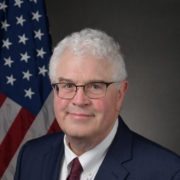
Boston, MA—Pioneer Public Interest Law Center today announced that it has added three new board members including the former head of MEMA, a former U.S Attorney for the District of Massachusetts, and a prominent law firm chairman.
“We are thrilled to add Kurt Schwartz, Andrew Lelling and Joel Carpenter to the Pioneer Law Center team,” said Frank J. Bailey, President. “These preeminent lawyers bring refreshing new perspectives along with passion for the rule of law to the Law Center. They are committed to helping advance and expand our mission.”
“It’s an honor to welcome these fine attorneys to the Law Center Board,” said Brackett Denniston III, Chair. “Each brings a wealth of expertise and a distinguished track record of legal excellence that will greatly enhance our work. Their shared commitment to advancing the Law Center’s mission of protecting the rule of law will be invaluable as we continue to drive impactful, principled legal solutions through litigation and amicus briefing in state and federal courts.”
“We are privileged to have such great minds from all walks of the legal community join the Pioneer Law Center Board,” said Bailey. “Their distinguished careers will be instrumental in advancing our mission of defending and promoting educational options, ensuring accountable government, and promoting economic opportunity across the Northeast and around the country.”
Kurt Schwartz
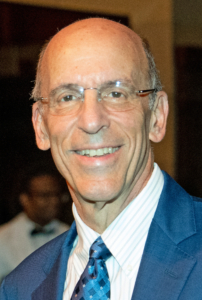 Since retiring in 2019 after 37 years of government service in Massachusetts, Kurt Schwartz has consulted with government agencies, corporations, and non-profits in the areas of emergency management, homeland security, crisis leadership, and COVID-19 preparedness and operations. He also serves on the National Boards of American Friends of Magen David Adom, IsraAID-US, American Friends of Herut, and is a Director of Charm Sciences, Inc.
From 2007 to 2019, Kurt was a Gubernatorial appointee to the Executive Office of Public Safety and Security where he served in several leadership roles including Undersecretary of Law Enforcement, Undersecretary of Homeland Security, Governor’s Homeland Security Advisor, Chair of the Massachusetts Homeland Security Advisory Council, and Director of the Massachusetts Emergency Management Agency. He also was a Gubernatorial appointee to the Board of Directors of the Massachusetts Port Authority and served on FEMA’s National Advisory Council and as Co-Chair of the International Emergency Management Group.
Between 1987 and 2007, Kurt worked as a state criminal prosecutor, including 5 years as Chief of the Criminal Bureau in the Massachusetts Attorney General’s Office and 8 years as Chief of the Special Investigations Unit in the Middlesex County District Attorney’s Office.
Earlier in his career, Kurt served as a police officer and emergency medical technician.
Kurt holds a Bachelor of Arts degree from Wesleyan University and a Juris Doctor degree from Boston College Law School. He is married, has two grown children, and lives in Concord, Massachusetts.
Joel Carpenter
 Joel Carpenter is a partner at Sullivan & Worcester, where he served as co-managing partner for many years. Joel is particularly experienced in the tax structuring of complex business and investment arrangements using partnerships, limited liability companies, and Subchapter S corporations. He advises a broad range of private and institutional investors, including real estate investment firms, on a wide variety of U.S. federal income tax matters. This includes fund formation matters, the acquisition and disposition of property, structuring debt and equity investments, equity compensation plans, and tax planning for investors.
Joel also advises on the tax structuring of corporate mergers and acquisition transactions, as well as the financing of emerging companies. He has served on the boards of several enterprises and provides individual income and estate tax planning services for individuals of substantial means.
Andrew Lelling
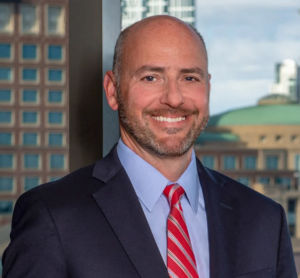 Andrew Lelling is a former United States Attorney and senior Department of Justice (DOJ) official with deep experience in white collar, securities, and international enforcement matters. He defends companies and individuals in complex civil litigation and government investigations. He also leads internal investigations and advises on compliance with federal, state, and international laws. He has successfully tried dozens of cases in federal and state courts.
Before joining Jones Day in 2021, Andrew was the U.S. Attorney for the District of Massachusetts, capping a 20-year career with the DOJ. During that time, he handled complex enforcement matters both as a line prosecutor and senior DOJ official, including corporate fraud prosecutions, parallel investigations with the U.S. Securities & Exchange Commission (SEC), trade secret theft, Foreign Corrupt Practices Act (FCPA) matters, civil and criminal health care enforcement, and international money laundering. Widely known for leading “Operation Varsity Blues,” the nationwide investigation of corruption in college admissions, he led major initiatives targeting COVID relief fraud, anti-kickback claims against pharma companies under the False Claims Act (FCA), and bank fraud during the financial crisis of 2007-2009. Andrew crafted federal enforcement policy on a national level, including initiatives targeting foreign economic espionage, trade secret theft, and cybercrime, as chair of the Attorney General’s Cybercrime and Intellectual Property Subcommittee.
In the early 2000s, Andrew led the investigation of the 2000 presidential election in Florida and negotiated human rights issues with the Chinese government. He teaches securities regulation and trial practice at Boston-area law schools.